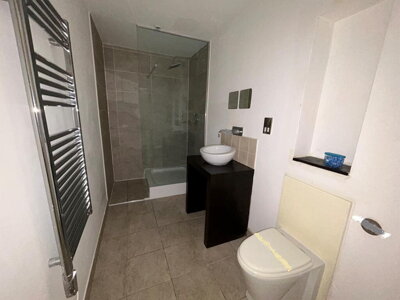
Browse 1 home for sale in DN18 from local estate agents.
One bed apartments provide a separate bedroom alongside distinct living space, bathroom, and kitchen areas. Properties in DN18 are available in various building types including mansion blocks, contemporary developments, and house conversions.
£0k
0
0
0
Source: home.co.uk
Showing 0 results for 1 Bedroom Flats for sale in DN18.
DN18's property market covers a wide spread of housing types, so budgets and lifestyles can sit side by side here. Detached homes sit at the top of the scale, averaging £351,037, and that extra space and privacy is a big part of the appeal for families. Semi-detached properties average £185,031, a strong middle ground for first-time buyers and growing households wanting more room without stretching too far. Across the twelve months to February 2026, there were 108 total property sales in DN18, which points to a steady level of activity in this established residential area.
Three active developments are keeping new build choice alive in Barton-upon-Humber. Kingfisher Meadow by Lovell Homes brings 2, 3 and 4 bedroom homes on Kingfisher Drive, DN18 5GA, priced from £156,818 to £338,077. Barratt Homes is marketing Waters Reach at the same postcode, with 3 and 4 bedroom properties from £190,271 to £338,077. Keepmoat Homes has Barton Waterside on Waterside Road, DN18 5BA, offering 2, 3 and 4 bedroom homes from £156,818 to £338,077. Together they give buyers a modern alternative to the older stock that dominates the town, with 71% of properties built before 1980.
Over the twelve months to February 2026, prices moved within a fairly narrow band. Detached properties fell by 0.8%, semi-detached homes edged up by 0.2%, and the better gains came from terraced properties at 0.4% and flats at 0.5%. That suggests demand is leaning towards cheaper housing options, without any dramatic surge. Overall, the market slipped by just 0.1% in average prices, so buyers have space to think rather than rush.

Barton-upon-Humber is a historic market town with Roman roots, and that long story shows in the built environment. Two medieval churches and numerous listed buildings sit within the designated conservation area, while the town centre still holds onto its original character through traditional brickwork, red brick properties, and period stone and render homes. With a population of 11,887 across 5,164 households, it feels settled and familiar, and local events tend to draw a strong turnout through the year.
Day-to-day life is well catered for here, with supermarkets, independent shops, healthcare services, and plenty of places to eat, from old-school pubs to modern cafes. The local economy has manufacturing links to Humber ports and related logistics, alongside retail, education, and healthcare jobs for residents. Many people of working age also commute to Hull and Grimsby, using the Humber Bridge and the road network to widen their options. Waitrose sits alongside smaller independent retailers, which gives the town centre a useful mix of convenience and browsing.
Far Ings National Nature Reserve and the Humber riverside walks give residents a good amount of outdoor space to enjoy. Weekends can easily stretch out into the Lincolnshire Wolds, while the Estuary brings watersports and coastal walks into the picture. Local parks are generally well kept and include children's play equipment, sports facilities, and picnic areas that get plenty of use. The 21% of properties built pre-1919 add a layer of period charm too, with original fireplaces, bay windows, and solid brick walls still sought after by buyers who want something with real character.

Families in DN18 have access to schools from primary through to secondary level, with several well-regarded options in and around Barton-upon-Humber. Barton-upon-Humber Primary School and Saints Peter and Paul Catholic Primary Voluntary Academy cover infant and junior years, while Huntcliff School is one of the main secondary choices for local pupils. Before committing to a move, buyers should check catchment areas and admission arrangements directly with North Lincolnshire Council, because school access and performance can make a real difference to family decisions.
The town's 36% of housing built between 1945 and 1980 mirrors the post-war growth of educational provision, with many schools set on established sites that have decent outdoor areas and community facilities. Barton-upon-Humber also has special educational needs provision and alternative education settings for families across North Lincolnshire. Performance has generally been steady, and parents can look up Ofsted ratings on the official website when comparing schools before buying in a particular neighbourhood.
Sixth-form study is available locally and a little further out, depending on the subject mix a student needs. Huntcliff School has a school sixth form, and Barton-upon-Humber Academy also offers sixth-form provision, while Hull and Grimsby are within reach for more specialist courses or particular programmes. Those transport links do make these choices practical, although journey times need to sit in the plan, especially for homes farther from the centre.

Practical transport links are one of Barton-upon-Humber's strengths for both residents and commuters. Sitting on the south bank of the Humber Estuary, the town gives relatively easy access to Hull via the Humber Bridge, which suits people working in the city or drawing on its wider job market. Bus services link Barton-upon-Humber with surrounding towns and villages, and road routes reach Grimsby as well as the motorway network towards Sheffield and Leeds. Stagecoach and other local operators run regular services across the town centre, residential streets, and nearby villages throughout the day.
The A15 is the main road through Barton-upon-Humber, running north towards Hull and south towards Scunthorpe and the M180 motorway. That dual-carriageway section cuts journey times to major employment centres compared with older routes. People heading to Grimsby can also use the A18 and A46, while junction 5 of the M180 links the town into the wider network serving Sheffield, Leeds, and beyond. Even at peak times, traffic in Barton-upon-Humber itself tends to stay manageable compared with larger towns.
Rail users usually travel a little wider afield, because Barton-upon-Humber is mainly served by buses and roads. Barnetby-le-Wold, the nearest mainline station, has Cross Country services to Sheffield, Leeds, and Birmingham, while Hull Paragon offers direct trains to London, Leeds, and Manchester. For most commuting, car travel still makes sense given the straightforward road connections, and the flat terrain also leaves cycling open for shorter trips. Parking in the town centre is fairly practical too, with free parking available at several locations for shopping and leisure visits.

Before we book a viewing, it makes sense to have a mortgage agreement in principle ready from a lender. It confirms budget and shows sellers that the finance side is already moving. With most DN18 homes priced below the national average at £235,377, plenty of buyers will find the mortgage process straightforward, but having that paperwork in hand can still strengthen an offer in more competitive parts of Barton-upon-Humber.
It helps to look closely at Barton-upon-Humber's own prices, recent sales, and the feel of each neighbourhood before making a move. Knowing the average figures for different property types, what drives values here, and how newer developments on Kingfisher Drive compare with period homes in the conservation area gives a clearer view of where the real value sits.
Viewings should be used properly, with attention on build quality, maintenance, and the distance to amenities, schools, and transport. We would also suggest taking photographs and notes, so options can be compared later and any worries can be passed to a professional assessor. In Barton-upon-Humber, homes near the Humber Estuary deserve a closer look for flood risk signs, and properties built before 1919 need their period features checked carefully.
Because 71% of DN18 properties were built before 1980, a RICS Level 2 Survey is a sensible step, not an optional extra. It can pick up damp, roof problems, timber defects, or possible subsidence on the local clay soils. Our inspectors know the traditional brick construction used across Barton-upon-Humber well, and they provide detailed reports on anything that comes to light during the survey. That kind of assessment protects the purchase and gives us useful room for negotiation if repairs are needed.
We would always appoint a conveyancing solicitor to deal with the legal side of a purchase, from searches and contracts through to registration. Our recommended conveyancers understand the local area and will carry out the right environmental searches, including flood risk checks for homes near the Humber. They also handle contact with the seller's solicitor and keep the paperwork in order before completion.
Once the legal work is complete and the finance is confirmed, contracts are exchanged and a completion date is agreed. At that stage, belongings can be organised, address records updated with banks, employers, and utilities suppliers, and the keys collected for a new home in Barton-upon-Humber. Our team can point buyers towards local removal firms and utility providers to make the move easier.
Properties in Barton-upon-Humber need a careful look because of the area's geology and environment. The local clay deposits have moderate to high shrink-swell potential, which can lead to foundation movement, especially in older homes with shallow foundations or properties near large trees. Houses built before 1930 often have solid brick walls, timber suspended floors, and less substantial foundations than modern builds, so a professional survey is particularly useful for those older places.
Flood risk deserves specific attention in DN18 because of the Humber Estuary and local watercourses such as the River Ancholme. Homes in low-lying spots or with river views can face a higher risk, so buyers should look at flood history, flood defences, and insurance implications before committing. Along the watercourses, superficial Till and Alluvium deposits can affect drainage and add to surface water flooding during particularly heavy rainfall events. Our surveyors always review flood risk data and property history when they inspect homes in affected postcode areas.
The Barton-upon-Humber Conservation Area brings planning restrictions that matter when buyers are considering alterations or extensions to period properties. Listed buildings may need consent for work that would be fine on unlisted homes, so renovation budgets should take that into account. The town's mix of red brick, render, and stone reflects local building traditions, and our inspectors are used to judging the condition and upkeep needs of each material type found here.
Older homes often need electrical and plumbing systems brought up to date. Properties built before 1960 may still have original wiring, and homes built before the 1970s can have lead or galvanised steel plumbing that may need replacing. Our surveyors check these systems as part of every inspection and will flag anything that needs a closer look from qualified electricians or plumbers before completion.

Knowing the full cost of buying in Barton-upon-Humber helps buyers set a realistic budget and avoid surprises partway through the transaction. On top of the purchase price, there will be stamp duty, legal fees, survey costs, and moving expenses to think about. For a home at the DN18 average of £235,377, most buyers benefit from the zero-rate threshold on the first £250,000, so standard purchasers would usually pay no stamp duty on average-priced homes in this area. First-time buyers get even more relief, with the zero-rate threshold extending to £425,000, which removes SDLT entirely for most purchases in this price range.
Survey fees matter too, particularly as 71% of DN18 homes were built before 1980 and may hide faults that are not obvious on a quick visit. A RICS Level 2 Survey for an average three-bedroom property in the area normally costs between £400 and £700, depending on size and surveyor fees. For older homes, or for places with unusual construction such as the period properties in the Barton-upon-Humber Conservation Area, a RICS Level 3 Survey may be worth the extra spend, since it gives a fuller picture of structural issues and renovation points.
Once conveyancing fees starting from £499 and removal costs are added, the total buying bill for a DN18 property can sit anywhere between £1,500 to £3,000 or more, depending on value and circumstances. Other costs may include mortgage arrangement fees, lender valuation fees, Land Registry fees for registration, and searches such as local authority, environmental, and drainage checks. Our recommended conveyancers keep pricing clear and give a full breakdown of expected costs at the start of the transaction.

According to February 2026 home.co.uk listings data, the average house price in DN18 Barton-upon-Humber is £235,377. Detached properties average £351,037, semi-detached homes average £185,031, terraced properties average £128,272, and flats average £105,000. In the twelve months to February 2026, there were 108 property sales, broken down into 35 detached, 38 semi-detached, 29 terraced, and 6 flats. Terraced properties and flats rose by 0.4% and 0.5% respectively over the past year, while detached homes fell by 0.8% and semi-detached properties grew by 0.2%.
Properties in DN18 Barton-upon-Humber sit within North Lincolnshire Council's jurisdiction. Council tax bands run from A through H according to value, and most standard three-bedroom homes in the area are in bands A through C. A typical three-bedroom semi-detached property in Barton-upon-Humber would likely fall into band B or C, while larger detached homes may be in bands D or E. Buyers should check the exact band for any property with the Valuation Office Agency or ask for it during conveyancing, since the band will affect ongoing ownership costs.
Primary and secondary education in Barton-upon-Humber serves the local community well enough for day-to-day family life. Barton-upon-Humber Primary School and Saints Peter and Paul Catholic Primary Voluntary Academy provide education for younger children, while Huntcliff School and Barton-upon-Humber Academy offer secondary places, with the latter also having sixth-form provision for older students. Parents should look at current Ofsted reports and admission policies when weighing up choices, as catchment areas can decide which schools children can reach from a given home address.
Stagecoach services are central to Barton-upon-Humber's bus network, linking the town with Hull, Grimsby, and nearby villages through the day. The Humber Bridge gives direct road access to Hull for commuters, while the A15 and the local road network connect towards Grimsby and the M180 motorway system. Rail travel is available from stations in the wider area, including Barnetby-le-Wold and Hull Paragon, and Barton-upon-Humber works well as a commuter base for people employed in larger cities. For most journeys, though, the straightforward road layout means car travel is still the easiest option.
Barton-upon-Humber has a few clear points in its favour for property investors. The average price of £235,377 keeps entry costs lower than nearby Hull and much of the UK, and the three active new build developments, Kingfisher Meadow, Waters Reach, and Barton Waterside, show that demand is still present. Manufacturing linked to Humber ports sits alongside service employment, while Hull and Grimsby remain realistic commuting targets. With 71% of the stock built before 1980, there is room for value-add work through renovation, although buyers still need to allow for survey fees and ongoing maintenance.
Standard SDLT rates from April 2025 apply to purchases in DN18, with 0% on the first £250,000, 5% on £250,001 to £925,000, 10% on £925,001 to £1.5 million, and 12% above £1.5 million. First-time buyers relief lifts the zero-rate threshold to £425,000 and applies 5% between £425,001 and £625,000. Since a typical DN18 home averages £235,377, most buyers will pay zero stamp duty, which keeps the market attractive for people taking their first step on the property ladder.
Flood risk remains relevant for some DN18 properties because of the Humber Estuary and watercourses such as the River Ancholme. Homes in low-lying areas near the Estuary or along the watercourses face greater risk from rivers and the sea, and surface water flooding can also happen during heavy rainfall in affected postcode areas. Our surveyors check flood risk data at every inspection and will flag any concerns that buyers should investigate further before they complete the purchase.
Different construction styles are visible across Barton-upon-Humber, reflecting the town's changing eras of development. Properties built before 1930 usually have solid brick walls, traditional lime-based mortar, and timber suspended floors, while homes built after 1930 generally move to cavity wall construction. Roofs are often pitched and finished with clay or slate tiles, depending on age and type of property. Newer developments from companies like Barratt Homes and Keepmoat Homes use modern building methods and better insulation standards. Our surveyors are familiar with all of the construction types found in the area.
Properties for Sale In London

Properties for Sale In Plymouth

Properties for Sale In Liverpool

Properties for Sale In Glasgow

Properties for Sale In Sheffield

Properties for Sale In Edinburgh

Properties for Sale In Coventry

Properties for Sale In Bradford

Properties for Sale In Manchester

Properties for Sale In Birmingham

Properties for Sale In Bristol

Properties for Sale In Oxford

Properties for Sale In Leicester

Properties for Sale In Newcastle

Properties for Sale In Leeds

Properties for Sale In Southampton

Properties for Sale In Cardiff

Properties for Sale In Nottingham

Properties for Sale In Norwich

Properties for Sale In Brighton

Properties for Sale In Derby

Properties for Sale In Portsmouth

Properties for Sale In Northampton

Properties for Sale In Milton Keynes

Properties for Sale In Bournemouth

Properties for Sale In Bolton

Properties for Sale In Swansea

Properties for Sale In Swindon

Properties for Sale In Peterborough

Properties for Sale In Wolverhampton

Enter your details to see if this property is within your budget.
Loans, cards, car finance
Estimated property budget
Borrowing + deposit
You could borrow between
Typical borrowing
Monthly repayment
Est. at 4.5%
Loan-to-value
This is an estimate only. Your actual budget may vary depending on interest rates, credit history, and personal circumstances. For an accurate affordability assessment, speak to one of our free mortgage advisors.
This calculator provides estimates for illustrative purposes only and does not constitute financial advice. Your home may be repossessed if you do not keep up repayments on your mortgage. Estimates based on 4.5% interest rate, repayment mortgage. Actual rates depend on your circumstances.
Homemove is a trading name of HM Haus Group Ltd (Company No. 13873779, registered in England & Wales). Homemove Mortgages Ltd (Company No. 15947693) is an Appointed Representative of TMG Direct Limited, trading as TMG Mortgage Network, which is authorised and regulated by the Financial Conduct Authority (FRN 786245). Homemove Mortgages Ltd is entered on the FCA Register as an Appointed Representative (FRN 1022429). You can check registrations at NewRegister or by calling 0800 111 6768.

We use cookies to show you personalised content and improve your experience of our website. Find out more in our Privacy policy and Cookie policy.