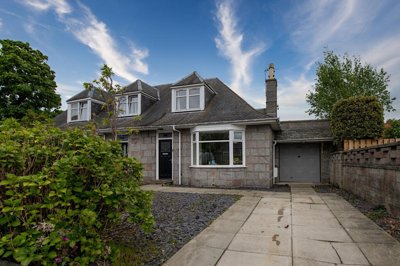
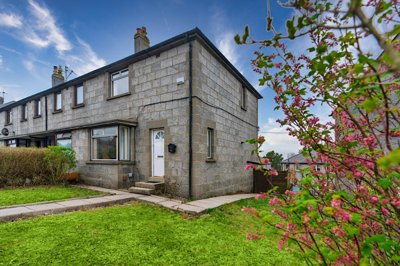
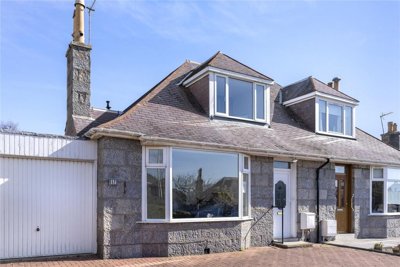
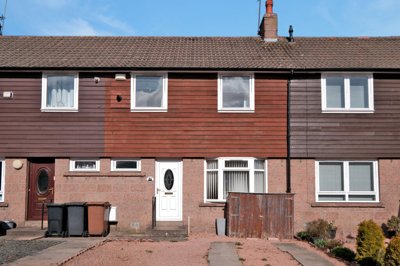
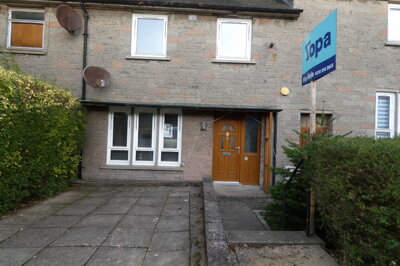
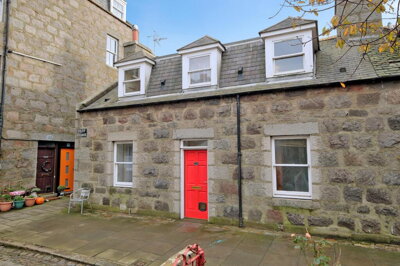
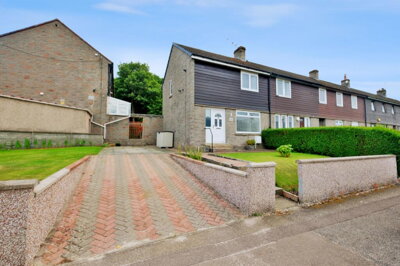
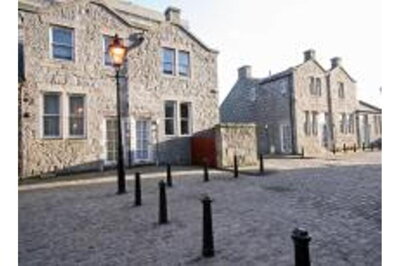
Browse 14 homes for sale in AB11 from local estate agents.
The 2 bed house market features detached, semi-detached, and terraced properties with two separate bedrooms plus living spaces. Properties in AB11 range from Victorian and Edwardian period homes to modern new builds, with pricing varying across different neighbourhoods.
£0k
0
0
0
Source: home.co.uk
Showing 0 results for 2 Bedroom Houses for sale in AB11.
AB11 has seen a sharp correction over the past decade, with average prices down 39% from the 2015 peak of £171,174. For buyers who sat out the last boom, that creates room to move. homedata.co.uk data shows 6,709 properties have changed hands in AB11 over the past year, so there is still plenty going on beneath the surface. Flats remain the cheapest route in, averaging between £87,554 and £106,050, while terraced homes usually sit somewhere between £171,470 and £193,158.
Detached homes in Aberdeen fetch the highest prices, averaging £179,600 according to homedata.co.uk, although some data sets put semi-detached homes higher, at £197,930. Across the wider Aberdeen market, values fell 7.4% year-on-year to December 2025, with the average property now worth roughly £133,000. Detached homes were down 5.6% over the year, flats slipped 8.7%, and yet Q3 2025 brought a small lift, with average house prices up 0.5% and sales volumes jumping 30%. Buyers are reading that as a sign of renewed confidence.
New build supply right in AB11 is thin on the ground, with most activity pushed out towards places such as Kingswells and Countesswells. Still, anyone after a brand new home can look further across Aberdeen, where schemes like Hazelwood offer 2 to 5 bedroom properties from £249,995 to £584,995. Because AB11 is so heavily flat-based, leasehold ownership is common, and we would always suggest checking service charges and ground rent arrangements before you commit.

Aberdeen earns its Granite City nickname for good reason, and the silvery-grey stone is everywhere in AB11, from streets of tenements to larger civic buildings. That gives the postcode a look that is hard to mistake and, in Scotland, fairly unusual. AB11 covers a mix of neighbourhoods, from the Maritime Museum quarter by the harbour to Ferryhill’s residential streets and Torry’s working-class heritage. The 2011 Census recorded 21,187 residents across 10,926 households in this compact part of the city, which helps explain the close-knit feel that many people notice straight away.
Green space is one of the pleasant surprises here. Duthie Park runs along the River Dee and includes the well-known David Welch Winter Gardens, while Hazlehead Park brings woodland walks and plenty of recreation space. The Cairngorms National Park is less than an hour’s drive away, so bigger scenery is within easy reach. Aberdeen beach is another local draw, with the long sweep of sand at Aberdeen Bay busy year-round with walkers and water sports fans.
Aberdeen’s economy has long been tied to oil and gas, and major employers such as Wood Group, Petrofac, Centrica, Shell UK, and BP still have a sizeable presence locally. At the same time, the city is building its role in renewable energy and carbon-capture technology, which is drawing investment and opening up skilled jobs. Aberdeen Asset Management, now part of Standard Life Aberdeen, is another important name in financial services, while NHS Grampian supports healthcare employment. The University of Aberdeen and Robert Gordon University add academic weight, as well as a bit of cultural energy.

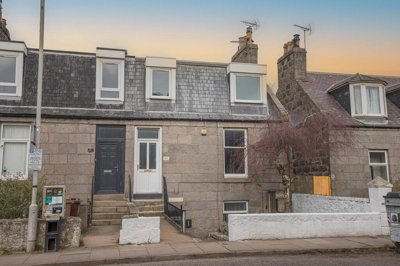
AB11 is shaped by granite. You see it in tenement facades, along Union Street, and in the grander public buildings that give Aberdeen its character. Much of the housing stock dates from the Victorian and Edwardian periods, when the city’s oil wealth helped fund a rush of stone-built development. In Ferryhill and the city centre, traditional granite tenements are still the main type, with high ceilings, generous rooms, and period details that newer homes rarely match. They tend to wear well, but age brings upkeep, so buyers need to be ready for the realities of older buildings.
When we view granite property in AB11, we look for a few problems that crop up again and again. Granite is tough, but the mortar between the stones can break down over time, especially in homes facing Aberdeen’s coastal weather. South-facing elevations often show the most weathering, simply because rain and wind have had decades to work on them. We also check the point where granite walls meet modern window frames, particularly where original sash and case windows have been swapped out, since those junctions can let water in.
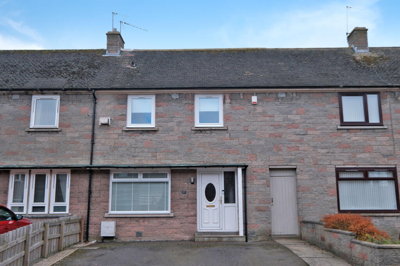
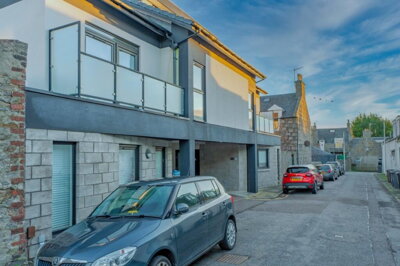
AB11 is not all granite tenements. There are post-war developments here too, plus modern apartment blocks built over the last 20 years or so. Even so, the balance still leans heavily towards flats, with homedata.co.uk listing 274 flats currently for sale against just 59 terraced properties, 27 semi-detached homes, and 74 detached properties in the wider Aberdeen market. That means many buyers in AB11 will end up with leasehold ownership, and we always advise reading the lease carefully before moving forward.
Aberdeen (AB11) has a broad spread of schools for families, with primaries serving local neighbourhoods and secondaries covering the wider city. Parents thinking about a move should look closely at catchment boundaries, because Aberdeen uses a coordinated admissions system for school places. Gilcomstoun Primary School serves the city centre, while Ferryhill School covers the residential Ferryhill area inside AB11.
Several secondary schools are well regarded by local families, including Aberdeen Grammar School, with its long academic history, and Harlaw Academy, which serves the north of the city. Some Aberdeen secondaries use zoning, giving priority to pupils who live within specific catchments, so school choice matters quite a lot if you have children of school age. There are also faith schools and specialist schools for families looking for a different approach.
After school, Aberdeen still has plenty to offer. The University of Aberdeen, founded in 1495, is one of Scotland’s ancient universities and teaches a wide range of undergraduate and postgraduate programmes. Robert Gordon University in Garthdee is known for professional and vocational courses with strong industry links. Scotland’s Rural College (SRUC) also has a campus in the city for land-based subjects. For adults, community learning centres across AB11 run evening classes and continuing education programmes.

AB11 is well connected, and Aberdeen Railway Station sits within the area itself. From there, direct services run to Edinburgh, taking approximately 2 hours 40 minutes, to Glasgow at around 3 hours, and to London King’s Cross in approximately 7 hours via the East Coast Main Line. ScotRail links also connect Aberdeen with towns across the north and north-east of Scotland, which makes car-free commuting realistic for plenty of residents. The station has had major recent improvements too, which have made it better for both commuters and people heading out for leisure.
Aberdeen Airport, out in Dyce just north of the city centre, gives the city strong domestic and international links, with regular flights to London, Manchester, and Birmingham, plus destinations across Europe. That matters in a place with so much oil and gas business tied into global operations. Bus services are run by First Aberdeen and a number of smaller operators, with routes covering all major residential parts of AB11 and linking into the rest of the city. The A90 provides a direct route south, while the A96 heads north towards Inverness.
Walking and cycling have had more attention in recent years, with dedicated cycle lanes now linking many residential areas to the city centre. The River Dee walkway and the beach esplanade are both popular for commuting and relaxed rides. Parking in central AB11 can be tight at peak times, so being near public transport and local shops often matters more than owning a car. Aberdeen Harbour, one of the UK’s busiest ports, also handles ferry links to Shetland and Orkney, which underlines the city’s role as a gateway to the islands.

We would start with the current property listings in AB11, just to see the spread, from granite tenement flats to Victorian terraces. Prices vary a lot between property types, so it helps to pin down the parts of Aberdeen that fit both budget and lifestyle. The ESPC platform covers the city well, while home.co.uk and homedata.co.uk add more listings and market detail.
Before you book viewings, speak to a lender and get an Agreement in Principle. It shows how much you may be able to borrow, and in Aberdeen’s competitive market it can make a seller more comfortable with your offer. With prices currently around £104,000 to £133,000, many buyers find their money goes further here than in a lot of other UK cities.
Next, arrange viewings of homes that match what you are after, and spend time judging the property itself as well as the street around it. AB11 runs from waterfront areas to residential terraces, so it is worth seeing places at different times of day if you can, just to get a feel for noise and the general atmosphere. Keep an eye on the neighbouring properties too, since their condition often tells you plenty.
Once an offer has been accepted, we would arrange a RICS Level 2 Survey, also known as a HomeBuyer Report, to pick up structural issues, damp, or defects. That matters even more with older granite buildings, where problems can stay hidden, and the cost is usually between £400 and £600 depending on size. For listed buildings in places like Ferryhill, a more detailed RICS Level 3 Survey may be the better option.
Use a solicitor who knows Scottish property transactions well, because the legal process here is not the same as in the rest of the UK and the paperwork is standardised in a different way. It is sensible to check that they have handled Aberdeen purchases before. We can point you towards several conveyancing firms with a strong record in AB11.
From there, your solicitor carries out the final checks and registers the title with the Land Register of Scotland. On completion day, the keys are handed over and you can start your next chapter in the Granite City. Once offers are agreed, Scottish completions usually move faster than English transactions.
AB11 includes a wide spread of housing, from Victorian granite tenements to post-war homes and modern apartments. Granite is the defining material in older Aberdeen property, and while it is generally very solid, it does bring its own issues, such as weathering, mortar deterioration, and specialist restoration work. When we look at older homes, we also check for damp penetration, which can be a particular problem in coastal parts of AB11 because of Aberdeen’s North Sea exposure.
There are also listed buildings in AB11 that buyers need to factor in. In places like Ferryhill, properties may carry category B listing status, which protects buildings of regional or more than local importance. A category B listed unfurnished townhouse in Ferryhill is a good example of the historic stock found across the area. With listed homes, alterations need special permissions, and original features can be restricted. If one is on your radar, allow for the cost of maintaining historic details and the extra planning requirements.
Flat ownership is the norm in AB11, and most recent sales have been apartments in multi-occupancy buildings. Anyone buying a flat should read the lease closely, especially the ground rent clauses and any escalation terms. Service charges can vary a lot between developments, so ask about planned maintenance, sinking fund contributions, and any major works that could lead to special assessments. Newer developments may feel more predictable on costs, though they can lack the character of traditional granite construction.

On surveys in AB11, we often come across issues that reflect the age and construction of the local housing stock. Older granite properties commonly show weathering on external walls, with the stone taking on a worn appearance after decades of Aberdeen’s coastal climate. The mortar pointing between stones can break down too, leaving gaps that let water in. We always inspect the pointing closely, because repointing on a large tenement can be expensive.
Damp is another regular finding in AB11, especially in ground floor flats and basements where moisture can build up. Being near the North Sea means homes in Torry and by the waterfront can face higher humidity, which may lead to damp penetration if ventilation is poor. We check for rising damp in ground floor properties and penetrating damp on south- or west-facing walls that take the full force of the prevailing winds. Window frames and their joins to granite walls are another common weak spot for water ingress.
Older Aberdeen homes often need work on the electrics, particularly if the systems have not been updated since construction. Victorian and Edwardian granite tenements can still have original wiring mixed with partial upgrades, which leaves a patchwork of old and new. We advise buyers to budget for a full electrical inspection if there has not been a recent test. Plumbing can be just as mixed, with lead, galvanised steel, and newer materials all appearing in the same property, and the true condition of older pipework often only becomes clear once renovation starts.
Average house prices in AB11 currently sit between £104,642 and £133,382 depending on the data source. Flats average between £87,554 and £106,050, terraced homes range from £171,470 to £193,158, and detached properties average around £179,600. Over the past year, prices have fallen by approximately 8% and sit 39% below the 2015 peak of £171,174, although recent figures point to stabilisation, with a 0.5% quarterly rise and a 30% surge in sales volumes.
Aberdeen City Council sets council tax bands from A through H, with property value assessed by the Scottish Assessors. Most flats in AB11 sit in bands A to C, while larger terraced and semi-detached houses usually fall into bands D to F. The exact band for any address can be checked through the Scottish Assessors Portal online, and the current Aberdeen council tax rates for 2024-25 are on the Aberdeen City Council website.
AB11 is served by several strong primary schools, including Gilcomstoun Primary and Ferryhill School, while Aberdeen Grammar School and Harlaw Academy are notable secondary choices. Because the city uses catchment areas for admissions, buyers with children should check which schools cover a specific address. For older pupils and students, the University of Aberdeen and Robert Gordon University offer excellent higher education within the city.
Transport in AB11 is another plus. Aberdeen Railway Station has direct services to Edinburgh, Glasgow, and London, while Aberdeen Airport offers domestic and international flights. The First Aberdeen bus network covers the city well, and the A90 and A96 trunk roads connect Aberdeen to the rest of Scotland, so regional car travel is straightforward.
AB11 also has decent investment appeal because its price point is lower than in many other UK cities of a similar size. The move away from oil dependence towards renewable energy and carbon-capture industries is creating fresh jobs, which may help support demand later on. Rental yields in the private rented sector remain competitive, and the large student population keeps demand steady for smaller homes. Investors should still keep one eye on the cyclical nature of oil and the possibility of further price swings.
In Scotland, property purchases use Land and Buildings Transaction Tax, or LBTT, instead of UK Stamp Duty. For residential purchases, there is no LBTT on homes up to £145,000, then 2% on the portion from £145,001 to £250,000, 5% from £250,001 to £325,000, 10% from £325,001 to £750,000, and 12% above £750,000. First-time buyers may qualify for relief on properties up to £175,000. Your solicitor will work out the exact figure during the conveyancing process.
Granite homes in AB11 need a careful eye, especially the mortar pointing, which can deteriorate after decades of Aberdeen’s coastal weather. We would also check for damp penetration in ground floor properties and look closely at the joins between original granite walls and modern window frames. In places like Ferryhill, listed building status can affect what can be altered and may shape renovation plans. A detailed survey is well worth arranging before you commit to any historic property.
Yes, the AB11 market is still heavily skewed towards flats, with most recent sales being apartments in multi-occupancy buildings. homedata.co.uk currently lists 274 flats for sale in the wider Aberdeen market, compared with just 59 terraced properties, 27 semi-detached homes, and 74 detached properties. That flat-heavy mix means most buyers in AB11 will be looking at leasehold ownership, so service charges, sinking fund contributions, and planned maintenance works all need a close read before you proceed.
From 4.5%
Expert mortgage advice and competitive rates for AB11 buyers
From £499
Specialist Scottish conveyancing solicitors for an AB11 purchase
From £455
Property surveys for homes for sale in AB11, Aberdeen
From £80
Energy Performance Certificate for your AB11 property
Knowing the full cost of buying in Aberdeen (AB11) matters if you want a realistic budget. Scotland uses Land and Buildings Transaction Tax, or LBTT, and the threshold structure is different from UK Stamp Duty. There is no LBTT to pay on properties up to £145,000, which makes homes in that bracket especially attractive. For properties between £145,001 and £250,000, the rate is 2% on that slice, rising to 5% for the portion between £250,001 and £325,000.
First-time buyers in Scotland get extra relief, with LBTT relief available on properties up to £175,000. So a first-time buyer picking up an average flat in AB11 at around £90,000 to £100,000 would pay no LBTT at all. On a terraced home at £180,000, the first-time buyer relief would cover the full amount, while a regular buyer would pay 2% on the bit above £145,000. Homes above £750,000 attract the top rate of 12% on the amount over that level.
There are other costs to budget for as well, not just LBTT. Solicitor fees usually run from £800 to £1,500 for standard transactions, and then there are search fees, land registration fees, and the survey itself. A RICS Level 2 Survey generally costs between £400 and £600 depending on size, while an Energy Performance Certificate starts from £80. If you are buying a flat with a factor, a share of any sinking fund contribution may also be due. Mortgage arrangement fees vary a lot by lender, from nothing to 1% or more of the loan amount, so it pays to compare the overall deal rather than staring only at the interest rate.

Properties for Sale In London

Properties for Sale In Plymouth

Properties for Sale In Liverpool

Properties for Sale In Glasgow

Properties for Sale In Sheffield

Properties for Sale In Edinburgh

Properties for Sale In Coventry

Properties for Sale In Bradford

Properties for Sale In Manchester

Properties for Sale In Birmingham

Properties for Sale In Bristol

Properties for Sale In Oxford

Properties for Sale In Leicester

Properties for Sale In Newcastle

Properties for Sale In Leeds

Properties for Sale In Southampton

Properties for Sale In Cardiff

Properties for Sale In Nottingham

Properties for Sale In Norwich

Properties for Sale In Brighton

Properties for Sale In Derby

Properties for Sale In Portsmouth

Properties for Sale In Northampton

Properties for Sale In Milton Keynes

Properties for Sale In Bournemouth

Properties for Sale In Bolton

Properties for Sale In Swansea

Properties for Sale In Swindon

Properties for Sale In Peterborough

Properties for Sale In Wolverhampton

Enter your details to see if this property is within your budget.
Loans, cards, car finance
Estimated property budget
Borrowing + deposit
You could borrow between
Typical borrowing
Monthly repayment
Est. at 4.5%
Loan-to-value
This is an estimate only. Your actual budget may vary depending on interest rates, credit history, and personal circumstances. For an accurate affordability assessment, speak to one of our free mortgage advisors.
This calculator provides estimates for illustrative purposes only and does not constitute financial advice. Your home may be repossessed if you do not keep up repayments on your mortgage. Estimates based on 4.5% interest rate, repayment mortgage. Actual rates depend on your circumstances.
Homemove is a trading name of HM Haus Group Ltd (Company No. 13873779, registered in England & Wales). Homemove Mortgages Ltd (Company No. 15947693) is an Appointed Representative of TMG Direct Limited, trading as TMG Mortgage Network, which is authorised and regulated by the Financial Conduct Authority (FRN 786245). Homemove Mortgages Ltd is entered on the FCA Register as an Appointed Representative (FRN 1022429). You can check registrations at NewRegister or by calling 0800 111 6768.

We use cookies to show you personalised content and improve your experience of our website. Find out more in our Privacy policy and Cookie policy.